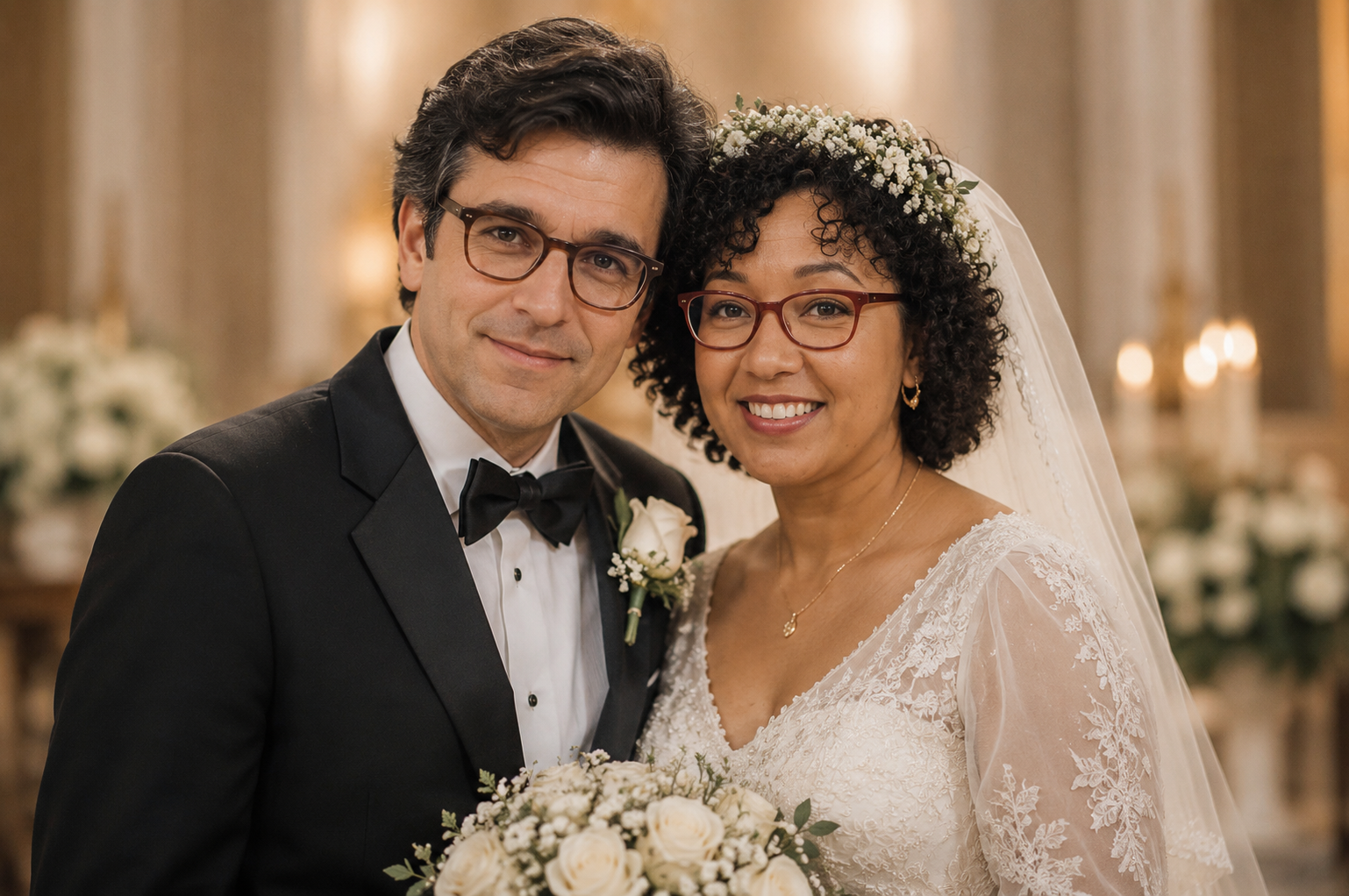
When two people stand at the altar, they make promises to the version of each other that exists in that moment.
The problem is that life does not stand still.
People change. Dreams change. Priorities change. Careers change. Bodies change. Beliefs change. Experiences change us.
One of the biggest misconceptions about marriage is the belief that the person you marry is the same person you will remain married to for the next twenty, thirty, or forty years.
They won't be. And neither will you.
The man or woman standing next to you on your wedding day is only the beginning of a much longer story. The happiest marriages understand this. The unhappiest marriages often fight against it.
Change Is Not The Enemy
Many couples panic when they notice change. The confident partner becomes quieter. The ambitious partner changes careers. The social butterfly becomes more home-oriented. The carefree spouse becomes more serious after children arrive.
Change feels threatening because it introduces uncertainty. But change itself is not the problem. Refusing to grow together is.
Healthy marriages create space for both people to evolve while remaining connected. They don't demand that a partner stay frozen in time.

The Person You Marry Is Not the Person You Stay Married To
You stood at an altar — or a courthouse, or a beach, or a living room — and you made a promise to a person.
But here is something nobody said out loud that day: the person you are promising yourself to will not be the same person in ten years. Neither will you.
And whether your marriage survives that truth depends entirely on what you decide to do with it.
This is not a warning. It is an invitation.
Because the marriages that thrive are not the ones where both people stayed exactly the same — frozen, unchanging, perfectly matched for decades without effort. Those marriages do not exist.
The marriages that thrive are the ones where two people made an ongoing, conscious decision to grow — and, crucially, to keep choosing to grow together.
That is a different skill entirely. And most of us were never taught it.
Change Is Not the Enemy of Marriage
When a marriage struggles, we often hear the same phrase: "You've changed."
It is said like an accusation. As though change were a betrayal of the original contract, a violation of some unspoken agreement to remain fixed in the version of yourself that someone fell in love with.
But change is not the problem. Unacknowledged change is the problem.
Change that is not communicated, not navigated together, not met with curiosity instead of defensiveness — that is what creates the fracture.
Every person you will ever love is in the process of becoming. At 25. At 40. At 58.
Career shifts, loss, faith, ambition, healing, parenthood, failure, success — life shapes us continuously.
The person who married you at 28 had not yet met the version of themselves that would emerge after grief, or professional reinvention, or the humbling work of raising children, or the slow accumulation of self-knowledge that only comes with years.
The question was never whether you would both change. The question was always whether you would face that change with honesty — and with each other.
The strongest marriages are not built on staying the same. They are built on staying curious about who the other person is becoming.

The Phases of Change Every Marriage Moves Through
Understanding these shifts does not make them painless — but it makes them navigable.
1. The Honeymoon Self
The version each of you presented at the beginning — optimistic, on your best behaviour, energised by newness. This is real, but it is not the whole person. No one leads with their most difficult edges at the start.
2. The Revealed Self
Life pressure, stress, and comfort begin to surface the fuller picture — habits, wounds, fears, and patterns inherited from childhood homes. This phase either deepens intimacy or begins the first quiet withdrawals.
3. The Evolving Self
Both people shift in response to major life events — career change, parenthood, loss, health, purpose. These shifts can pull a couple apart or become the foundation of a deeper, more honest partnership.
4. The Chosen Self
This is the most powerful phase. Each person begins making deliberate choices about who they want to be. Couples who reach this phase together, with open communication, are the ones who last.
What Nobody Tells You About Long-Term Love
There is a version of marriage we are sold in culture — soulmates, effortless connection, the idea that the right person makes everything easy. That version is not only unrealistic. It is actively harmful.
Because when the inevitable difficulty arrives, people mistake it for a sign that they married the wrong person. They did not marry the wrong person. They married a human being who, like all human beings, is layered, evolving, and imperfect.
The difficulty is not evidence of incompatibility. It is the invitation to do the deeper work of real partnership.
Consider a couple married eighteen years. In their early years they were passionate, aligned, and everything felt easy. By year eight, after children, career stress, and relocation, they felt like strangers sharing a home.
What saved them was not rekindling the feeling of year one. That was gone, and it was supposed to be. What saved them was learning to be genuinely curious about who the other person had become. To ask questions. To stop assuming they already knew all the answers about someone who had been quietly changing right in front of them.
They did not fall back in love with the person they married. They fell in love with the person their partner had grown into. That is a far more durable and meaningful thing.
Truths Most Couples Learn Too Late
- Familiarity is not the same as knowing someone. You can share a home with someone for decades and still be operating on an outdated understanding of who they are.
- Growing apart is a choice, not an inevitability. Distance accumulates in small daily decisions.
- Your unhealed wounds will become your marriage's problems.
- The person who needs to grow most might be you.
- Boredom in a marriage is information. It is often a signal that something important has stagnated.

How to Grow Together Instead of Apart
Growing together is not luck. It is not fate. It is a practice. It is a set of decisions made consistently that signal to your partner and yourself that this relationship is something you are actively building.
Keep the Conversation Current
Ask questions you have never asked before. Not about logistics. About dreams, fears, purpose, and growth.
Revisit Your Shared Vision
The life you wanted at 28 is not necessarily the life that serves you at 44. Talk honestly about where you are going and whether you are still going there together.
Celebrate Who They Are Becoming
Growth is not a threat to the marriage. Resisting growth often is.
Do Your Own Inner Work
Therapy. Reflection. Accountability. Self-awareness. These are investments in the marriage.
Name the Drift Early
Distance rarely appears overnight. Talk about it while it is still small.
Choose Each Other Again
Not just on anniversaries. In ordinary moments. Daily recommitment is what creates extraordinary marriages.
The Most Empowering Reframe in Marriage
Stop asking: "Are we the same people we were?"
You are not. You never will be again. That is not failure. That is life.
Start asking: "Are we choosing each other as the people we are becoming?"
That is the right question. And it is one you get to answer together every single day.
The couples who reach forty years together and still genuinely like each other did not avoid change. They learned how to navigate it. They talked through difficult seasons. They stayed curious. They invested in the relationship when it was inconvenient. They chose the long game.
That is not a fairy tale. That is a skill set. And skill sets can be built.
Actionable Takeaways
- Schedule a "state of us" conversation.
- Ask your partner one new question this week.
- Identify one area where you have resisted your partner's growth.
- Audit the quality of your daily attention.
- Invest seriously in your own growth.
- Seek support before you reach crisis.
You Are Not Stuck With Who You Were. Neither Are They.
The most empowering truth in marriage is this: it is not a fixed thing. It is a living, breathing, evolving relationship between two people who are themselves living, breathing, and evolving.
The version of the marriage you have today is not the only version available to you. You can build something deeper than what you started with. More honest. More grounded. More intimate.
The person you married is not the person you stay married to. That is not a crisis. It is the whole point. The whole magnificent, demanding, rewarding point.
You don't just marry a person. You commit to growing alongside one. And that, done with intention and courage, is one of the most extraordinary things two people can do together.